Thursday, January 26, 2023

Class X - First Flight - Poem - Dust of Snow by Robert Frost

Robert Frost's 'Dust of Snow' is a short, powerful poem about an unexpected moment in nature that changes a person's entire day. Let's dive into its meaning, imagery, and analysis.

Complete Text of the Poem
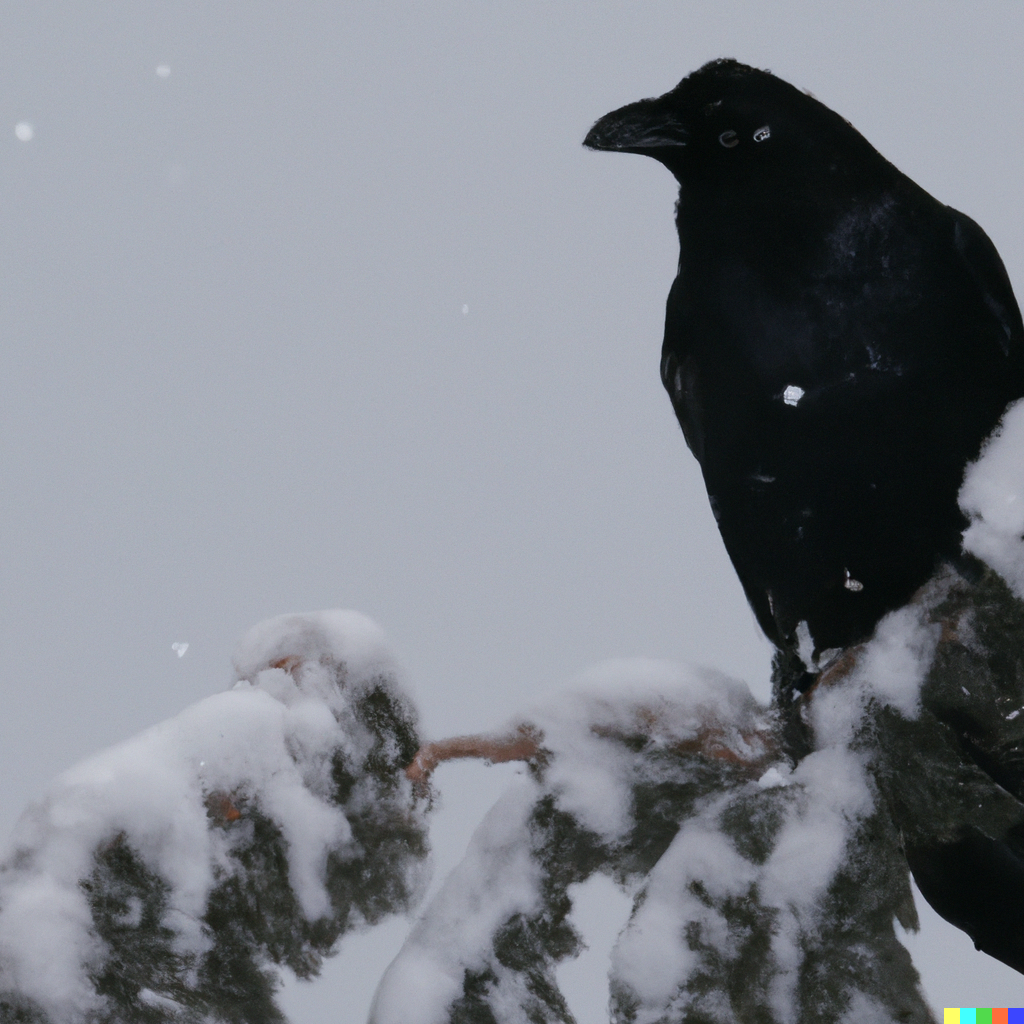
A black crow on a snowy branch, representing the poem's imagery

The way a crow

Shook down on me

The dust of snow

From a hemlock tree

Has given my heart

A change of mood

And saved some part

Of a day I had rued.

- Robert Frost

Summary

The poem written by Robert Frost describes the speaker's observation of a crow shaking snow from a hemlock tree, which leads to a change in the speaker's mood and saves a day that the speaker had previously felt negative about. The poem is simple and short, but it describes the small, unexpected moments of beauty and wonder in life that can change our perspective. The image of the crow shaking snow from a tree is a metaphor for the way in which small things can have a big impact on our emotions and outlook.

Rhyme scheme: abab

Imagery Used in the Poem

The poem uses imagery to create a vivid picture in the reader's mind of the scene being described. The imagery is simple but evocative.

The first image is of a crow shaking snow from a hemlock tree. This image is used to convey the idea of movement and action, as well as the idea of the natural world. The image of the snow being shaken from the tree is also used to convey the idea of something being released or let go.

The second image is of the dust of snow. This image is used to convey the idea of something small, delicate, and fleeting. It also creates the sense of a magical moment that is over quickly.

The third image is of the speaker's heart, which is described as having a change of mood. This image is used to convey the idea of emotion and inner experience. It also suggests that something has affected the speaker on a personal level.

The fourth image is of a day that had been rued. This image is used to convey the idea of disappointment or regret. The idea of a day being "ruined" is a metaphor for the speaker's negative emotions and outlook, which are transformed by the sight of the crow and snow.

All of these imagery work together to create a sense of the natural world and its power to affect our emotions and outlook on life.

Thinking About the Poem

Question 1.

What is a “dust of snow”? What does the poet say has changed his mood? How has the poet’s mood changed?

Answer:

In the poem, "dust of snow" refers to small flakes of snow that have been shaken loose from a tree by a crow. The poet states that this simple action of the crow shaking down the dust of snow from a hemlock tree has given his heart a change of mood.

The poet's mood is not specifically described in the poem, but it can be inferred that it was initially negative or gloomy, as he mentions that the sight of the crow and snow has "saved some part of a day I had rued." This suggests that the sight of the crow and snow has had a positive impact on the poet's mood, lifting it from the negative state it was in before.

Therefore, the poet's mood has changed from negative or gloomy to a more positive or uplifted state after observing the crow shaking snow from a hemlock tree.

Question 2.

How does Frost present nature in this poem? The following questions may help you to think of an answer.

(i) What are the birds that are usually named in poems? Do you think a crow is often mentioned in poems? What images come to your mind when you think of a crow?

(ii) Again, what is “a hemlock tree”? Why doesn’t the poet write about a more ‘beautiful’ tree such as a maple, or an oak, or a pine?

(iii) What do the ‘crow’ and ‘hemlock’ represent — joy or sorrow? What does the dust of snow that the crow shakes off a hemlock tree stand for?

Answer:

In this poem, Frost presents nature as something that can have a profound impact on human emotions and outlook. He uses imagery to convey the idea that small, unexpected moments of beauty in nature can change our perspective.

A crow is not a bird that is often mentioned in poems, as it is often associated with negative connotations such as death and negativity. However, in this poem, Frost uses the image of a crow to convey the idea of movement, action, and the natural world.

The poet's choice to write about a hemlock tree rather than a more "beautiful" tree suggests that he is interested in the small, unexpected moments of beauty in nature rather than grand, striking displays.

Question 3.

Have there been times when you felt depressed or hopeless? Have you experienced a similar moment that changed your mood that day?

Answer:

As human beings, we all have our down moments. I have also been depressed and depressed in the past occasionally. Sometimes due to my performance in academics and co-curricular activities, and sometimes due to friends and family. Yes, I have experienced similar moments as that of the poet, which uplifted my mood and helped me to move on with life. Beauty in nature, birds chirping or a beautiful sunset or sunrise, and sharing time with friends and family all such things have a very positive effect on my mood and make my day.

Literary Devices Used in the Poem

In the poem "Dust of Snow" by Robert Frost, several literary devices are used:

  1. Imagery: The poem creates vivid images, such as the crow shaking down snow from a tree. Example: "The dust of snow from a hemlock tree."

  2. Symbolism: The crow and the hemlock tree are symbols. The crow often symbolizes bad luck or negativity, while the hemlock tree is associated with poison. Together, they symbolize sadness or gloom, but the snow's fall changes the mood positively.

  3. Alliteration: Repetition of consonant sounds at the beginning of words for a musical effect. Example: "Has given my heart."

  4. Inversion: The normal order of words is reversed for poetic effect. Example: "Has given my heart a change of mood" (instead of "Has changed my mood").

  5. Enjambment: The sentence continues from one line to the next without a pause. Example: "And saved some part / Of a day I had rued."

Extract Based Questions

Extract 1

"The way a crow
Shook down on me
The dust of snow
From a hemlock tree"

1. What did the crow shake down on the poet?

  • (a) Dust from the branch
  • (b) Small particles of snow
  • (c) Leaves from the tree
  • (d) A small twig

2. What does the hemlock tree symbolize?

  • (a) Joy and happiness
  • (b) A beautiful landscape
  • (c) Sorrow and negativity
  • (d) Springtime

3. What is the rhyme scheme of this stanza?

  • (a) aabb
  • (b) abba
  • (c) abab
  • (d) abca

Extract 2

"Has given my heart
A change of mood
And saved some part
Of a day I had rued."

1. What effect did the falling "dust of snow" have on the poet?

  • (a) It made him angry.
  • (b) It made him feel cold.
  • (c) It changed his mood from negative to positive.
  • (d) It had no effect.

2. What does the word "rued" mean?

  • (a) Enjoyed
  • (b) Celebrated
  • (c) Held in regret
  • (d) Forgotten

3. Which literary device is used in the line "Has given my heart"?

  • (a) Simile
  • (b) Alliteration
  • (c) Metaphor
  • (d) Personification

Next Post

Read Next:

Poem: Fire and Ice by ROBERT FROST

Click here to continue to the next analysis →

Class 11 - English - Hornbill - Ch. 3 - Discovering Tut: The Saga Continues

👑 Discovering Tut: The Saga Continues

Class XI · Hornbill · by A.R. Williams · Summary & Solutions

Golden mask of King Tutankhamun
Hello Class XI!

Welcome to the solutions for "Discovering Tut: The Saga Continues" by A.R. Williams. This chapter takes us on a fascinating journey into the life, death, and modern scientific examination of the boy-king Tutankhamun. Let's decode the mysteries together!

Understanding the Text – Q1

Give reasons for the following: King Tut’s body has been subjected to repeated scrutiny.

Answer: King Tut's mummy has been repeatedly studied due to his historical significance, the mystery surrounding his sudden death, and the advancement of scientific techniques allowing new discoveries each time.

Give reasons for the following: Howard Carter’s investigation was resented.

Answer: Carter's investigation was resented because he dismembered the mummy to extract it from the coffin. This brutal, intrusive method was seen as disrespectful and treasure-hunting oriented rather than culturally sensitive.

Give reasons for the following: Carter had to chisel away the solidified resins to raise the king’s remains.

Answer: Carter had to chisel the hardened resins because they had solidified and firmly cemented the mummy to the inside of the golden coffin. Without chiselling, it was impossible to lift the remains for examination or transport.

Give reasons for the following: Tut’s body was buried along with gilded treasures.

Answer: Tut was buried with gilded treasures because ancient Egyptians believed in the afterlife. These goods were meant to ensure comfort, display royal status, and provide magical protection in the next world.

Give reasons for the following: The boy king changed his name from Tutankhaten to Tutankhamun.

Answer: The boy king changed his name to honour Amun, restoring the traditional polytheistic religion abandoned by his father Akhenaten, who had promoted worship of the sun-disk Aten.

Understanding the Text – Q2

List the deeds that led Ray Johnson to describe Akhenaten as “wacky”.

Answer: Akhenaten was called "wacky" for upending Egyptian tradition. He overthrew the pantheon of gods to establish monotheism centred on Aten, built a new capital city, closed temples of other deities, and drastically altered the canonical art style to naturalistic forms.

What were the results of the CT scan?

Answer: The CT scan revealed that King Tut suffered multiple ailments: a congenital bone disorder (Klippel-Feil syndrome), a badly broken leg, severe malaria, and an infection. These conditions likely caused his health to deteriorate, though the exact cause of death remains unclear.

List the advances in technology that have improved forensic analysis.

Answer: Advances like DNA fingerprinting, CT scanning, radiocarbon dating, and digital imaging have revolutionised forensic analysis, providing non-destructive ways to examine ancient remains and artifacts with incredible precision.

Explain the statement, “King Tut is one of the first mummies to be scanned — in death, as in life...”

Answer: This phrase means Tut continues to lead even in death. Just as he ruled ahead of his peers during his lifetime, his mummy was the pioneer subject for CT scanning, paving the way for modern non-invasive Egyptological research that others would later follow.

Talking About the Text

Scientific intervention is necessary to unearth buried mysteries.

Answer: Scientific intervention is indeed crucial for uncovering hidden truths. Tools like CT scans and DNA analysis help us reconstruct history without physically destroying artifacts. However, opponents argue that excessive intervention can desecrate cultural relics and disturb the sanctity of ancient burial sites. While science provides objective data, it must be balanced with cultural sensitivity and ethical protocols to ensure that the pursuit of knowledge does not come at the cost of disrespecting the dead.

Advanced technology gives us conclusive evidence of past events.

Answer: Yes, advanced technology yields highly conclusive and objective data. For example, radiocarbon dating can pinpoint the age of artifacts to a specific century, and CT scans can reveal hidden injuries. Yet, some argue that technology only provides raw data; interpretation still involves human bias. Furthermore, tech can miss cultural contexts—like the spiritual significance of a burial ritual. Thus, while tech is powerful, it must be paired with historical and anthropological insight to form a complete picture of the past.

Traditions, rituals and funerary practices must be respected.

Answer: Absolutely. Traditions and funerary rituals are sacred threads connecting communities to their ancestors. Disturbing mummies or removing artifacts can be seen as a violation of religious and emotional sentiments. On the other hand, some argue that scientific progress and historical understanding require physical examination. However, modern archaeology advocates for non-invasive methods. Ultimately, the dignity of the deceased and the sentiments of their descendants should take precedence over mere curiosity, ensuring that research is conducted with the utmost respect.

Knowledge about the past is useful to complete our knowledge of the world we live in.

Answer: Knowledge of the past is fundamental to understanding our present. It informs us about the origins of civilizations, the development of human thought, and the causes of societal changes. For instance, studying past climate patterns helps us predict future environmental shifts. Without this historical lens, we would lack context for current political borders, religious conflicts, and cultural identities. The past is a vast library of human trials and triumphs, and accessing it equips us with the wisdom to build a better future.

Interactive Quiz

🧠 Check Your Comprehension

Tap or click the card that best answers each question. Your selection will be highlighted.

1. What was the primary purpose of performing the CT scan on King Tut's mummy?
2. Why did Howard Carter have to chisel away the solidified resins?
3. What major religious change did Akhenaten introduce?
4. What was King Tut's original name before he changed it?
5. What did Howard Carter have to do to separate the mummy from the golden coffin?
6. Where was King Tut's tomb discovered?
7. Why was Carter's investigation resented by many?
8. What did the CT scan reveal about King Tut's leg?
9. Which advance in forensic technology was specifically used on King Tut's mummy in 2005?
10. What does the phrase "in death, as in life" imply about King Tut?
11. Why did Tutankhamun change his name to honour Amun?
12. Which of the following actions contributed to Akhenaten being described as "wacky"?
13. What is the main purpose of studying the past according to the chapter?
14. Why were gilded treasures buried with King Tut?
15. What is the primary advantage of using CT scans over older methods like Carter's?

Teacher's Insight: The Boy King's Legacy

Tutankhamun's story is a fascinating collision of ancient mysticism and modern technology. The chapter forces us to question: How much are we willing to disturb the dead for the sake of knowledge?

Notice the contrast between Howard Carter's harsh, treasure-seeking methods and today's non-invasive CT scans. This evolution reflects a growing ethical consciousness in archaeology — a realisation that ancient remains are not just "specimens" but once-living individuals with cultural dignity.

Tut's brief reign and mysterious death remind us that history is often written in fragments. Even with cutting-edge science, some questions remain unanswered. That ambiguity is what keeps history alive — it invites us to think critically, interpret wisely, and always approach the past with humility and respect.

🌟 Discovering Tut – Solved!

Keep these key themes in mind: mystery, scientific progress, cultural respect, and the ever-evolving quest for truth. These are the threads that weave the saga of history. Happy revising!